Back to School People Outline Style: A Practical Guide to Getting the Most from Your Digital Design Assets
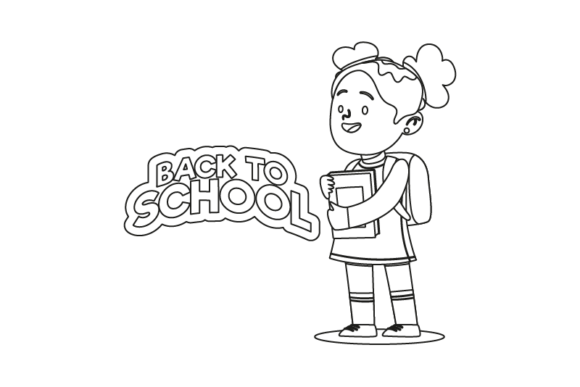
If you have come across a digital design bundle labeled Back to School People Outline Style, you may be wondering what it actually includes and how to use it effectively. These collections typically offer a set of outline-style illustrations of people in school-related settings, delivered in multiple file formats—AI, EPS, SVG, DXF, JPG, and PNG—all on a 1920x1280 pixel canvas. The idea is to give you flexibility across different design tools and use cases.
Many people buy such assets because they look clean, modern, and easy to adapt. But the reality is that outline-style graphics come with their own set of nuances. Without understanding a few key details, you can end up with results that feel unfinished, look messy, or simply don't work the way you expected. Let's walk through the most common missteps and how to avoid them.
Mistake 1: Ignoring the Difference Between Raster and Vector Files
The bundle includes both raster formats (JPG, PNG) and vector formats (AI, EPS, SVG, DXF). Each serves a different purpose, and using the wrong one for your project can cause real frustration.
If you try to enlarge a JPG or PNG beyond its original 1920x1280 pixel canvas, you will see pixelation. That blocky look ruins the clean, professional aesthetic that outline-style illustrations are meant to deliver. The same happens if you print a raster file at a large size without checking resolution.
The fix: For any project that requires resizing—whether you are making a banner, a poster, or a large sticker—use the vector files (AI, EPS, SVG, or DXF). These formats store the design as mathematical paths, so you can scale them up or down infinitely without losing quality. Reserve the PNG and JPG for quick drafts, social media posts, or small-scale digital use where the original size works fine.
A good habit: open the SVG or AI file first when you start a new project. That way, you begin with the most flexible version of the design.
Mistake 2: Assuming All Outline Styles Are Ready to Use as Is
Outline-style illustrations are intentionally minimalist. They feature clean lines with no fills or minimal shading, which gives them a modern, sketch-like appearance. But some buyers expect them to look like fully colored, polished illustrations straight out of the box.
If you use the design as-is without considering your background, contrast, or overall composition, the outlines can blend into the page or appear incomplete. This is especially true if you place them on a white background without adding any visual separation.
The better approach: Treat outline-style graphics as a foundation, not a finished product. Add your own color accents, subtle fills, or background shapes to make the people stand out. For example, if you are creating a back-to-school flyer, place the outline illustration on a soft colored circle or rectangle. You can also duplicate the outline layer, offset it slightly, and use a different color to create a playful shadow effect that adds depth without losing the outline feel.
Think of these assets as a starting point that you are meant to build upon, not a final image you simply drop into a layout.
Mistake 3: Overlooking File Compatibility with Your Software
Not every program opens every format well. If you use a free or web-based design tool, you might find that EPS or AI files do not import correctly. Some vector files lose their editability, or the outlines appear broken when opened in software that has limited support for certain vector features.
What to check before you buy or download: Confirm which file types your preferred design software supports. If you use Adobe Illustrator or Inkscape, AI and SVG will work well. If you use a cutting machine like a Cricut or Silhouette, DXF and SVG are the safest choices. For Canva, SVG and PNG are most reliable. Knowing your software's limitations ahead of time saves you from downloading a bundle where half the files are unusable.
If you do encounter a file that opens incorrectly, try converting it. Many free online converters can turn EPS or AI into SVG, which is widely compatible. Just keep in mind that conversion may occasionally alter stroke weights or alignment, so always check the result before using it in a final project.
Mistake 4: Not Checking the Stroke Weight and Line Consistency
Outline-style designs rely entirely on line quality. If the stroke weight is too thin, the illustration disappears when printed. If it is too thick, it loses that clean, delicate look. Some users assume the default stroke settings in their software are fine, but that is rarely the case when you scale or repurpose the design.
Practical advice: When you open the vector file, take a moment to examine the stroke settings. Adjust the stroke weight to suit your final output size. A design meant for a small sticker will need a different line thickness than one used on a large poster. Also, check that all lines in the illustration use a consistent stroke weight—sometimes imported files have mixed settings that create uneven visual weight.
Set a standard stroke weight for your project and apply it uniformly. This small step makes the final result look intentional and professional, rather than haphazard.
Mistake 5: Using the Wrong Format for Cutting Machines
Many people buy outline-style people illustrations specifically for use with cutting machines like Cricut or Silhouette to create vinyl decals, iron-on transfers, or paper cutouts. A common mistake is using the PNG or JPG file and expecting the machine to cut around each outline accurately.
Raster images do not contain the path data that cutting machines need. You will end up with jagged cuts or the machine refusing to read the file altogether.
The right way: Use the SVG or DXF file for cutting projects. These vector formats contain clear path information that the machine software can interpret. Before uploading, open the file and check that the paths are closed and there are no stray nodes. If you see gaps in the outlines, use the node editing tool in your design software to close them. A solid, continuous outline ensures a clean cut.
If your machine software requires you to flatten or combine layers, do that before sending the design to the machine. Taking these steps turns a frustrating experience into a smooth one.
Mistake 6: Overcomplicating the Design with Too Many Elements
Outline-style illustrations shine when used with restraint. Because they are minimal by nature, pairing them with too many other graphic elements—busy backgrounds, multiple fonts, heavy borders—can make the final piece feel cluttered and confusing.
Some designers try to compensate for the simplicity of the outline by adding lots of decorative extras. That usually backfires. The outlines get lost, and the message becomes unclear.
A better strategy: Embrace the minimalist quality. Let the outline illustrations breathe. Use ample white space, a limited color palette, and one or two supporting design elements. For a back-to-school poster, a single outline figure paired with a headline and a small amount of text is often more effective than a crowded layout. The outline style naturally draws the eye, so give it room to do its job.
If you want to add visual interest, try using a subtle textured background or a single accent color that complements your brand or theme. Less truly is more with this design style.
Mistake 7: Neglecting to Test the Design in Its Final Medium
A design that looks great on your screen may not work as well when printed, cut, or displayed on a different device. Outline-style graphics are especially sensitive to this because their thin lines and lack of fills can change appearance dramatically depending on the medium.
What to do: Always create a test version before committing to a full production run. Print a small sample on the same paper or material you plan to use. For cutting projects, do a test cut on scrap material. For digital use, preview the design on the actual platform where it will appear—whether that is a website, social media feed, or online ad.
Check for line visibility, color contrast, and overall readability. Adjust stroke weight or background color based on what you see in the test. This simple habit prevents costly mistakes and helps you deliver a polished final product every time.
Mistake 8: Skipping the License and Usage Terms
It is easy to assume that because you bought the file, you can use it however you want. But digital design assets often come with license restrictions, especially regarding commercial use, redistribution, or incorporation into products for sale.
What to look for: Before using the Back to School People Outline Style files in a client project or selling items that include the designs, read the license terms provided by the seller. Some licenses limit the number of copies you can make, require attribution, or prohibit using the design in certain types of merchandise. Knowing these terms upfront protects you from legal headaches and ensures that your business use is above board.
If the license is vague or missing entirely, reach out to the seller for clarification. Responsible creators are usually happy to explain their terms.
Making the Most of Your Outline Style Assets
Back to School People Outline Style digital files are versatile tools when used with intention. They work well for classroom decorations, educational materials, event flyers, social media graphics, stickers, and custom apparel. The key is to match the file format to your task, build upon the outline foundation, and test your output before going live or printing at scale.
By avoiding these common missteps, you save time, reduce waste, and produce results that look intentional and professional. Whether you are a beginner just getting comfortable with vector files or an experienced designer looking for clean, adaptable illustrations, outline-style assets can be a valuable addition to your creative toolkit—as long as you use them wisely.