Designing with Back to School Poster People Outline Assets for Creative Projects
Creating visually compelling back-to-school content often requires versatile design elements that communicate a welcoming, energetic, and inclusive atmosphere. Among the most effective tools for educators, graphic designers, and content creators are vector-based illustrations such as the Back to School Poster People Outline assets. These digital files offer a flexible foundation for posters, flyers, social media graphics, and classroom materials. Understanding their structure, format options, and real-world applications helps users maximize their creative output while maintaining a professional finish.
Understanding the Core Asset Package
A typical Back to School Poster People Outline collection includes multiple file formats designed to accommodate different software ecosystems and printing needs. The standard package offers six distinct digital files, each serving a specific purpose. The inclusion of AI (Adobe Illustrator) and EPS (Encapsulated PostScript) formats allows seamless editing in vector-based programs, preserving scalability without loss of resolution. The SVG (Scalable Vector Graphics) format is ideal for web and app interfaces, while the DXF (Drawing Exchange Format) file supports compatibility with CAD software and cutting machines. For immediate use in presentations or quick layouts, the JPG and PNG raster formats provide ready-to-place options with transparent background support in the PNG variant.
Each file is delivered on a 1920px × 1280px canvas, a resolution that balances high-definition output with manageable file sizes. This canvas size is particularly well-suited for standard poster proportions, social media cover images, and presentation slides. Users can scale elements up or down depending on their target medium, but the native dimensions offer a reliable starting point for most back-to-school projects.
Vector Formats for Unrestricted Scalability
The AI and EPS files are the backbone of the Back to School Poster People Outline set for professional designers. These vector-based formats store illustrations as mathematical paths rather than pixel grids. Consequently, a single outline can be enlarged to billboard size or reduced to a business card without any degradation in quality. This characteristic is especially valuable when creating multi-purpose assets that need to appear across large posters, digital banners, and printed handouts. The outline style itself simplifies the visual language, making it easier to colorize, combine with other graphics, or overlay onto complex backgrounds.
SVG for Digital Interactivity and Web Use
For educators building interactive whiteboard activities or school website graphics, the SVG format offers significant advantages. SVG files remain lightweight while supporting responsive scaling across devices. When embedded in HTML documents, they can be animated or styled with CSS, opening possibilities for hover effects or step-by-step reveal animations. A Back to School Poster People Outline in SVG form can serve as a clickable icon on a learning portal or as a decorative element in a virtual classroom environment. The vector nature ensures crisp rendering on retina displays, which is increasingly important as students and parents access information from tablets and smartphones.
DXF for Physical Production and Cutting
The inclusion of a DXF file extends the usability of the outline assets beyond digital design. Teachers, hobbyists, and entrepreneurs using laser cutters, vinyl plotters, or CNC machines can import the DXF directly into their hardware software. This allows the creation of physical classroom decorations, custom stickers, door signs, or even stencils for painting. The outline style works especially well for cut projects because the clear, simple contours translate cleanly into cutting paths. A teacher could produce a set of reusable name tags, bulletin board borders, or welcome signs by loading the Back to School Poster People Outline DXF file into a die-cutting machine, choosing appropriate material, and running the job in minutes.
PNG and JPG for Quick Deployment
For users who need immediate results without opening a vector editor, the PNG format provides a transparent-background version of the outlines. This is particularly useful when layering the illustration over a colored poster background or a photograph. The JPG alternative works well for full-color mockups or for printing when transparency is not required. Both raster formats are directly usable in tools like Canva, Microsoft Word, PowerPoint, and Google Slides, lowering the barrier for educators and parents who may not have advanced design software. The 1920px × 1280px resolution ensures that even at full-page print sizes, the outlines remain sharp and professional.
Classroom Teachers and School Administrators
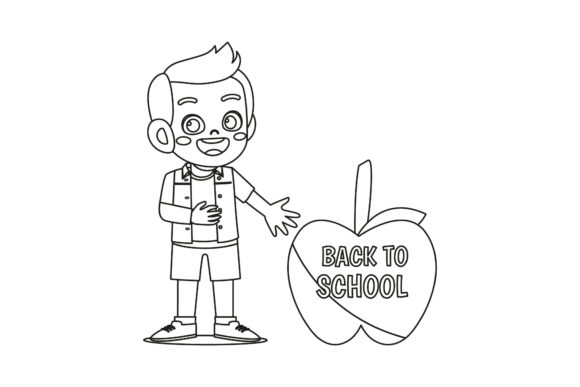
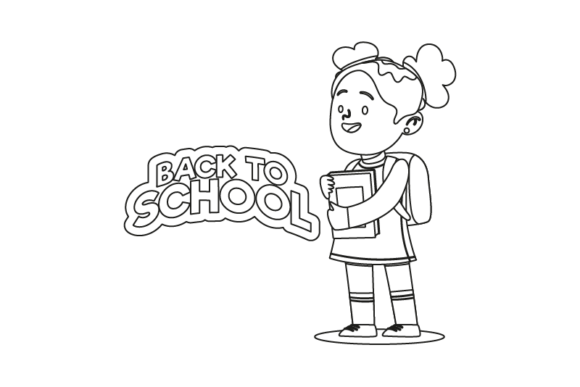
Educators frequently need to create welcoming environments for the start of the school year. The Back to School Poster People Outline assets can be used to design hallway posters that celebrate returning students, classroom rules displays, or directional signage for open houses. By customizing the colors to match school branding or classroom themes, teachers can maintain consistency across their materials. The outline style allows the inclusion of diverse student silhouettes without specifying facial features or skin tones, promoting an inclusive atmosphere where every child can see themselves represented. The simple forms also invite student participation—children can color in printed outlines during first-week activities, making the poster a collaborative project.
Graphic Designers and Marketing Professionals
For designers working with school districts, educational publishers, or tutoring centers, the vector formats offer efficient customization. Changing the color palette, adding text, or combining multiple outline figures into a single composition becomes straightforward in Illustrator or similar software. The Back to School Poster People Outline collection can serve as a base for creating campaign variations—a horizontal version for a website banner, a vertical version for a bus stop poster, and a square version for an Instagram post—all derived from the same source file. The scalability also means that a single outline can be repurposed as a small icon on a brochure or expanded for a large trade show display.
Content Creators and Social Media Managers
Social media content for back-to-school promotions requires quick turnaround and visual consistency. The PNG and SVG formats allow creators to drop outlines into templates without technical barriers. A YouTube channel focused on teaching tips might use the outline as a recurring visual motif in thumbnails and background slides. An Instagram campaign for a school supply brand could feature the outlines in stories with animated text overlays. The clean, modern look of the outline illustrations fits well with flat design trends and works harmoniously with bold typography and bright accent colors common in seasonal marketing.
Hobbyists and DIY Enthusiasts
Home-based creators who run small businesses on platforms like Etsy or participate in school fundraising projects find the DXF and SVG formats particularly valuable. The ability to cut the outlines from adhesive vinyl for crafting custom water bottles, notebooks, pencil cases, or tote bags opens a revenue stream or donation opportunity. The files can also be used to create iron-on transfers for T-shirts or fabric banners. Because the outlines are provided as separate elements, users can arrange multiple figures into a crowd scene, create a border of repeated silhouettes, or isolate a single figure for a focal point. The simplicity of the designs ensures that even first-time machine users achieve clean cuts and successful weeding when working with vinyl.
Color and Composition Strategies
While the outlines arrive as black-and-white line art, their potential expands dramatically with thoughtful color application. Designers should consider the overall mood they want to convey. Warm tones like orange, yellow, and coral create an energetic, friendly feeling suitable for elementary school themes. Cool tones such as blue, teal, and green project calm and focus, appropriate for middle school or high school environments. For digital use, applying gradient fills or subtle patterns inside the outlines adds depth without complicating the silhouette. When printing, ensure that the line weights remain visible after scaling—very thin lines may disappear if reduced too much, so testing at target dimensions is recommended.
Combining Outlines with Other Design Elements
The Back to School Poster People Outline assets work best when integrated with supporting graphics. School supply illustrations, chalkboard textures, geometric shapes, or typographic elements can complement the human figures. The outlines can be arranged in a row to suggest a lineup of students walking into school, grouped in a circle to imply collaboration, or spread across the canvas to create a sense of busy school life. Leaving negative space around the figures helps them read clearly, especially when they are placed against photographic backgrounds or busy patterns. Designers should also consider the directionality of the figures—orienting them inward toward the center of the composition creates a welcoming effect, while outward-facing positions can suggest departure or exploration.
File Management and Versioning
Given that the asset package includes six formats, maintaining organized file management practices supports efficient workflows. Designers working on recurring campaigns should save the AI or EPS source files with editable layers, so they can update colors or positions each year without starting from scratch. For teams collaborating across departments, providing the SVG or PNG versions in a shared cloud folder ensures everyone can access the assets without needing specialized software. When multiple users will edit the same project, establishing naming conventions for modified versions prevents confusion. A file named Back_to_School_Poster_People_Outline_2025_CMYK clearly indicates its purpose and color space.
Print Versus Digital Optimization
Although the native canvas resolution of 1920px × 1280px works well for many purposes, users should verify that the output meets their specific requirements. For high-quality commercial printing, converting AI or EPS files to CMYK color mode and ensuring that line thicknesses are suitable for the printing method is important. For digital display, RGB mode and compressed PNG or SVG formats load quickly while maintaining visual fidelity. When preparing files for a large poster, scaling vector outlines upward carries no penalty, but placing raster PNG files at more than 150% of their original size may introduce pixelation. In such cases, reverting to the vector source and re-exporting at the higher resolution is the safer approach.
Customization Workflows and Creative Possibilities
One effective approach to using the Back to School Poster People Outline collection involves establishing a consistent visual language across a series of materials. A school might use the same outline figures on the main welcome banner, classroom door labels, the school website, and a printed family newsletter. This repetition builds recognition and reinforces the community theme. Designers can vary the colors or backgrounds per context while keeping the figure silhouettes consistent, achieving a cohesive look across diverse touchpoints.
Another workflow involves layering multiple outline figures to create a crowd or team scene. Because each figure is provided as an individual scalable element, users can duplicate, resize, and rearrange them to form dynamic compositions. Overlapping figures slightly, varying their sizes, and rotating them adds a natural, unposed feel. This technique works particularly well for school spirit posters, sports team banners, or event promotion where a sense of community participation is desired. Adding text elements such as “Welcome Back,” “Teamwork Makes the Dream Work,” or event dates anchors the visual with clear messaging.
For interactive or multimedia projects, the SVG format allows the figures to be coded with hover states or click events. An education technology developer could build a “Find Your Classroom” interactive map where students click on outline figures to reveal room numbers or teacher names. A presentation designer could animate outlines to walk across a slide or fade in sequentially as talking points are introduced. These dynamic applications go beyond static poster use and demonstrate the versatility of well-prepared vector outlines.
Choosing the Right Format for Your Project
Selecting among the six available formats depends on the user's technical environment and final output. For professional print design kept editable for future revisions, the AI or EPS file is ideal. For web and interactive applications, SVG provides the best balance of quality and performance. For physical production through cutting machines, DXF remains the industry standard. For quick deployment in office software or social media tools, PNG with transparency or JPG as a lightweight alternative serves well. Many users will benefit from keeping all six formats archived so they can respond to any request without needing to convert files later.
The Back to School Poster People Outline assets, when understood thoroughly, become more than simple illustrations. They represent a foundation for consistent branding, efficient production, and creative expression across print, digital, and physical media. By matching the file format to the task, applying thoughtful color and composition choices, and maintaining organized file practices, users at every skill level can produce professional results that enhance the back-to-school experience for students, families, and staff alike.