Back to School Character Outline Style: A Strategic Design Resource for Creators and Entrepreneurs
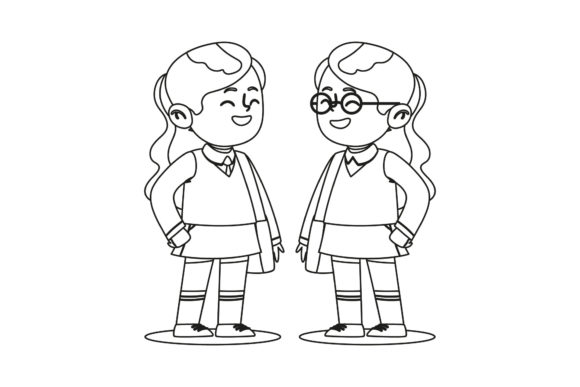
In the world of seasonal design assets, few visual styles offer the combination of clarity, nostalgia, and versatility that the Back to School Character Outline Style provides. This approach uses clean line art to depict school-related subjects—students with backpacks, books, pencils, globes, rulers, and classroom scenes—rendered as outlines rather than filled illustrations. The result is a graphic language that is both simple to customize and instantly recognizable. For entrepreneurs, educators, marketers, and creators, understanding when and how to deploy this style can influence everything from brand positioning to operational efficiency. This article explores the strategic value of this design asset, practical use cases, planning considerations, and the risks of using it without a clear purpose.
Why the Back to School Character Outline Style Matters for Your Business and Creative Goals
Effective visual communication depends on assets that convey meaning quickly while remaining flexible across platforms. The Back to School Character Outline Style excels in both areas. Because the characters are drawn with clear, uncluttered lines, they work well at small sizes on mobile screens, as well as large formats like banners or posters. This makes them valuable for consistent branding across digital and print channels. For a small business owner preparing a back-to-school marketing campaign, using a unified set of outline characters can signal reliability, approachability, and attention to detail. Instead of piecing together disparate clip art, a coherent style creates a professional impression that supports trust and recognition.
The style also taps into the emotional associations of returning to school—new beginnings, growth, learning, and preparation. When applied thoughtfully, these characters can evoke warm, familiar feelings without appearing childish or overly sentimental. This balance is especially useful for audiences that include both children and adults, such as parents browsing for school supplies or educators looking for classroom materials. The outline format allows you to add your own brand colors, patterns, or textures, making the asset adaptable to different color palettes and tonal preferences. Rather than dictating a mood, the style invites you to shape it according to your strategic objectives.
Practical Applications Across Goals and Audiences
One of the strongest arguments for using the Back to School Character Outline Style is its range of practical uses. For an entrepreneur launching a line of educational products, these characters can become the visual anchor for packaging, instruction sheets, and website icons. Because the files come in multiple formats—AI, EPS, SVG, DXF, JPG, and PNG—you can easily integrate them into design software, cutting machines, or web platforms. The 1920x1280 pixel canvas size, for example, is ideal for social media headers, slideshares, or printed posters without requiring extensive resizing.
For a content creator or blogger, outline characters can illustrate posts about study tips, classroom organization, or learning resources. The lightweight style ensures that the illustrations don’t distract from the text, while still providing visual breaks that improve readability and engagement. In email newsletters, a row of outline icons can act as clickable navigation elements or visual cues for different sections, guiding the reader’s eye naturally.
Educators and homeschooling parents can use the files to build worksheets, flashcards, and bulletin board decorations. The SVG and DXF formats are particularly useful for cutting machines to create physical manipulatives or wall decals. Because the characters are outlines, they can also serve as coloring pages, encouraging student participation and creativity. In these contexts, the style supports learning objectives by making abstract concepts concrete without overwhelming visual clutter.
For event planners or store owners, the Back to School Character Outline Style works for themed decor, signage, and promotional materials. A retail space can use the characters on window displays or shelf tags to create a cohesive back-to-school atmosphere. Even a small online business selling digital planners or stationery can incorporate the style into product mockups and social media templates, ensuring a polished and unified aesthetic.
Planning Your Use: From File Selection to Implementation
Strategic use of this resource begins with understanding the file formats and choosing the right one for your workflow. The AI and EPS files are ideal for advanced editing in vector software, allowing you to adjust stroke weights, colors, and combine elements with other graphics. If you work primarily with web graphics or responsive design, the SVG format offers scalability without loss of quality, and it integrates cleanly with HTML and CSS. For users who need simple, immediate output, the JPG and PNG files provide ready-to-use raster images with transparent or white backgrounds, depending on the file. The DXF format caters to users with cutting machines—useful for DIY projects or physical classroom materials.
Before integrating the characters into a campaign or product line, take time to define the primary goal. Is it to increase brand recognition during the back-to-school season? To drive sales of educational bundles? To reinforce a message of growth and new beginnings? Each objective suggests different placements, sizes, and modifications. For instance, a character placed in a social media profile picture might need to be cropped tightly or colored with brand colors to remain identifiable at a small scale. On a website hero banner, the same character could be part of a larger composition with overlapping text or layered shapes.
Another planning tip is to consider the tone of your overall visual identity. Outline styles work well with minimalist, modern, or playful brands. If your brand relies on detailed photography or heavy textures, contrast the outline characters with a light background or soften them with a wash of color. Avoid simply dropping the characters into a busy layout; give them room to breathe. Because the outlines are simple, they pair effectively with sans-serif typography and ample white space, which can elevate the perceived quality of your materials.
Testing is a crucial, often overlooked step. Run a small batch of materials—a social media graphic, a flyer, or a product label—with the character style and gather feedback from a representative audience. Ask whether the design feels relevant, clear, and aligned with your message. A/B test different versions with adjusted colors or character poses to see which drives higher engagement or conversion. This empirical approach reduces the risk of deploying a style that doesn’t resonate.
Strategic Considerations and Potential Risks
Using any design asset without clear context can undermine your efforts. The Back to School Character Outline Style, while versatile, carries specific risks if applied carelessly. One risk is overuse across unrelated contexts, which can dilute its impact. For example, using school characters for an adult corporate seminar might confuse the audience or appear unprofessional. Another risk is failing to differentiate your brand: if many competitors use similar outline character sets, your materials may blend in rather than stand out. To avoid this, customize the characters with unique details, your brand palette, or combine them with original typography and layouts.
There is also the risk of misalignment with audience expectations. If your primary audience consists of high school students or college instructors, the style might feel too juvenile if the characters depict elementary-aged scenes. Consider the age range and maturity level of your audience, and choose characters that match their context. Similarly, in more formal communications—like a financial aid flyer or a school policy document—line art may be better used sparingly as decorative accents rather than central illustrations.
From a technical perspective, always verify the file integrity and usage rights. While the product description offers multiple formats, check that the files are editable to your needs. Some outline styles include multiple layers; ensure you can separate components if necessary. Also, consider resolution: the 1920x1280 canvas is generous for standard digital use, but if you plan to print large format posters, you may need to scale the vector files significantly. Vector formats (AI, EPS, SVG) handle scaling effortlessly, but raster formats (JPG, PNG) may lose quality if enlarged beyond their native resolution.
Long-Term Value and Integration into Your Workflow
One of the most strategic ways to use the Back to School Character Outline Style is as part of a reusable asset library. Because back-to-school themes recur annually, investing time in customizing and organizing these files can yield returns over multiple seasons. Create templates for social media posts, email headers, and product packaging that incorporate the characters, and then refresh them each year by changing colors, backgrounds, or adding new elements. This consistency builds familiarity while saving production time.
For teams, establish a shared folder with the original editable files and a style guide that specifies how the characters should be used—stroke weights, color combinations, spacing, and do's and don'ts. This ensures that anyone producing materials follows the same visual language, maintaining brand coherence. If you work with freelance designers or contractors, provide the SVG or AI files along with clear briefs to accelerate onboarding.
The style also supports long-term creative evolution. Once you are comfortable with the basic outlines, you might adapt them into different seasonal themes—add a graduation cap for end-of-year materials, or combine with nature motifs for spring learning resources. The simplicity of the line art makes it a strong foundation for building a broader visual vocabulary, which can strengthen your brand identity across multiple touchpoints over time.
Making Intentional Choices: A Decision-Making Approach
To use this resource intentionally rather than randomly, follow a structured decision-making process. First, define the specific outcome you want to achieve—awareness, sales, education, or atmosphere. Next, select the file format that best supports that outcome and your technical capabilities. Then, customize the characters to align with your brand’s color system and tone. Produce a minimum viable version of your material and test it with real users or customers. Finally, review the results against your original goal and refine before scaling.
For example, a freelance educator creating a digital course landing page might choose the SVG format for responsive web use, select characters depicting children studying, color them with soft blues and greens, and place them as illustrations beside bullet points. After launching the page, they could track click-through rates or email sign-ups compared to a previous version. If conversion improves, the style becomes a validated asset for future pages.
In another scenario, a retail business owner designing a window display for August might print large-scale PNG posters of outline school supplies, mount them on cardboard, and add real bookstore props. The result is a visually consistent and low-cost display that catches the attention of passersby. By repeating this approach each year with slight variations, the business establishes a recognizable seasonal tradition that customers look forward to.
Ultimately, the Back to School Character Outline Style is a tool—effective only when guided by strategy, context, and audience understanding. Its simplicity is an advantage, but that same simplicity demands that you supply the meaning through thoughtful arrangement and messaging. When you treat it as a raw material rather than a ready-made solution, you unlock its full potential to support your goals, whether you are building a brand, teaching a lesson, or launching a campaign. Approach it with the same careful planning you would apply to any major decision, and the results will speak for themselves.