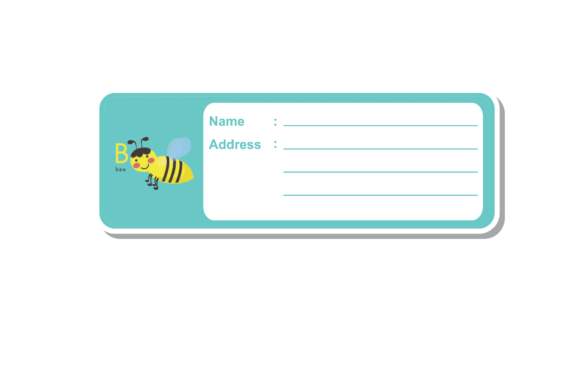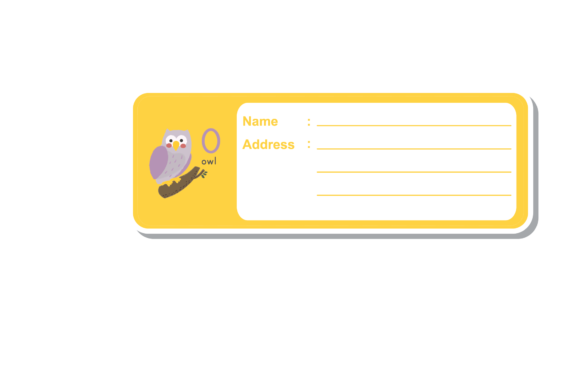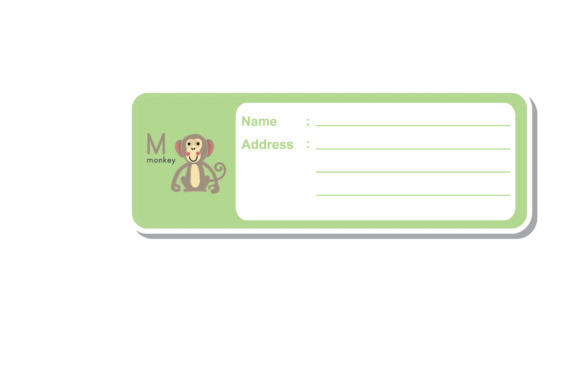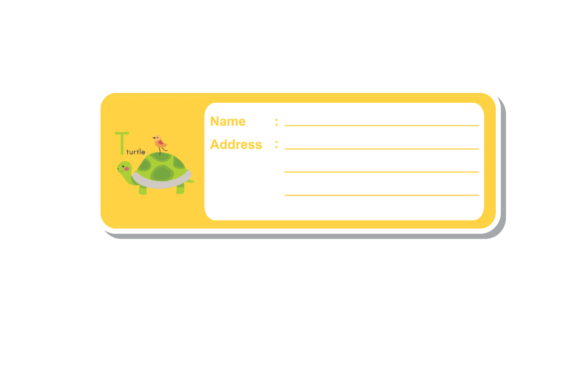
Integrate the Back to School Label Book Animal Kangaroo into Your Labeling Workflow
Preparing for a new school year or launching a themed product line requires organization and cohesive design. The Back to School Label Book Animal Kangaroo digital asset pack provides a structured starting point for creating consistent labels without starting from scratch. Whether you are an educator setting up a classroom, a parent organizing supplies, or a small business owner offering customized back-to-school gear, this collection of vector and raster files integrates directly into standard design and production pipelines. Understanding its structure and formats allows you to move from planning to finished product with less friction and greater visual unity.
Understanding the Digital Toolkit: Formats and Their Roles
The true value of this label book lies in the range of included formats. You receive AI, EPS, SVG, DXF, JPG, and PNG files, each sized at 1920 px by 1280 px. This selection ensures compatibility across nearly every design environment you might use.
Vector formats, which include AI, EPS, SVG, and DXF, allow for infinite scaling without quality loss. If you plan to print large posters or shrink labels down to small sticker sizes, these are essential. AI and EPS files are the mainstay for professional designers working in Adobe Illustrator or CorelDRAW. SVG provides broad web compatibility and is the default standard for cutting machines like Cricut and Silhouette. DXF extends compatibility to CAD software and precise industrial cutting workflows.
Raster formats, represented by JPG and PNG, offer immediate usability. The PNG file, with its transparent background, is ideal for dragging and dropping into document editors, Canva, or presentation software. The consistent 1920x1280 canvas size ensures that regardless of the format you choose, the aspect ratio and composition remain stable, saving you from resizing and repositioning artwork later.
Preparing for Projects: Where the Asset Pack Fits in Your Planning
Before production begins, preparation determines the efficiency of your execution. This asset pack functions as a foundational template that reduces the time spent on graphic design, allowing you to focus on logistics and output.
For Educators and School Staff
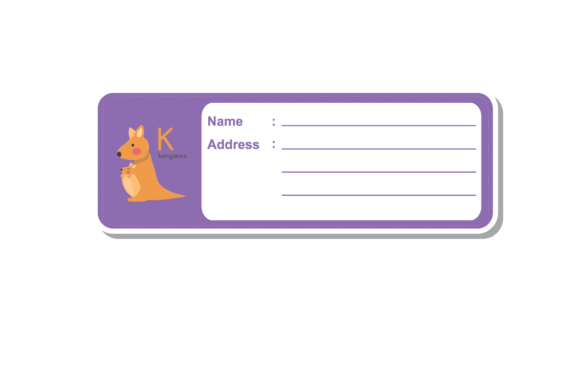
Start by listing your labeling needs: name tags, book bins, supply baskets, and cubby labels. Open the AI or SVG file in your preferred vector software. Set up an artboard with your school’s specific output dimensions, such as Avery label templates. Duplicate the kangaroo graphic and adjust text fields for each student. Because the graphic is already designed, you spend your time on data entry and layout rather than drawing.
For Creators and Entrepreneurs
Use the planning phase to define your product line. Will you sell physical sticker sheets, digital planner stickers, or laminated book labels? The transparent PNG files allow you to prototype quickly in a simple interface before committing to a print run. Prepare your color palette and printing settings at this stage to avoid mid-project disruption. The AI file gives you access to the original layers, enabling you to customize colors or elements to match a client’s brand or a specific classroom theme.
Interacting with Other Tools and Resources
This asset pack is designed to be a component in a larger workflow. It interacts cleanly with standard software and hardware:
- Vector Editors (Illustrator, Inkscape, CorelDRAW): Use AI or EPS for precise editing. Adjust path curves, change color swatches, and add custom text to individualize each label.
- Design Tools (Canva, Photoshop, Affinity): Import the transparent PNG for quick compositing. The 1920x1280 size fits nicely as a full canvas element or as a high-resolution overlay.
- Cutting Machines (Cricut, Silhouette, Brother ScanNCut): Upload SVG or DXF files directly. The clean vector paths ensure smooth cuts around the kangaroo design, reducing the likelihood of peeling or tearing.
- Print Management Software: Pair the JPG files with standard label sheet templates (such as Avery 5160). The consistent resolution ensures print clarity at various DPI settings.
A typical production workflow might involve opening the AI file in Adobe Illustrator, adjusting the color profile to CMYK for print accuracy, exporting a layered PDF for the printer, and simultaneously saving an SVG for the cutting machine operator. This dual-output workflow ensures the printed label design precisely matches the cut line.
Implementation: Executing Your Labeling Project
This stage is where the asset directly contributes to your tangible output. The way you implement the files depends on your specific end goal, but the same core asset can serve multiple purposes.
Executing for the Classroom
Consistency is key in a learning environment. Using the same base graphic across all labels helps children identify their belongings and spaces quickly. Open the SVG files in your cutting machine software. Resize the kangaroo to fit standard 2x4 inch label stickers. Use the text tool to overlay student names directly within the software. Use the same design for book labels, snack tags, and art folders. The thematic repetition reinforces organization without looking chaotic, and the unified visual language makes cleanup and sorting at the end of the year straightforward.
Integrating into a Small Business Workflow
If you run a shop creating personalized school items, this label book serves as a foundational template that you can reuse repeatedly. Import the AI file into your production template. Lock the kangaroo graphic layer, and create editable text fields for names. This allows you to fulfill orders by simply changing the text and exporting to a print-ready PDF or SVG for cutting. Batch process a class set of labels in under 30 minutes. The 1920x1280 base canvas provides plenty of resolution for clear previews on your shop listings, ensuring customers see exactly what they will receive.
Personal Use for Parents and Hobbyists
For organizing your own children’s gear, the short path from download to printed label is the priority. Use the PNG files directly in a word processor or basic photo editor. Insert the image onto a label template, adjust the size, and print on sticker paper. For extra durability, print on matte sticker paper and laminate before trimming. The PNG’s transparency allows the background of your label paper to show through, saving you from having to cut out white boxes around the graphic.
Post-Project: Quality Control, Consistency, and Long-Term Use
One of the strongest arguments for using a structured digital asset pack is maintainability. This is not a one-time asset if you manage your files properly.
Archiving and Reusability
Store the AI and EPS source files in a dedicated project folder. Because the asset is vector-based, you can return to it next year and simply adjust the names or colors. This turns a one-time download into a reusable workflow component. For educators, this means you build a library of themed years. For business owners, this means you can offer the same foundational design year after year, building brand recognition with your customers.
Quality Control Checks
- Print Test: Before running a full batch, print a single test label on plain paper. Check the color accuracy and fit against your label sheet template. Adjust your printer settings for bleed if necessary.
- Cut Test: When using SVG or DXF for a cutting machine, perform a test cut on cardstock to confirm the blade settings correctly trace the kangaroo paths. Verify that small details, such as the tail or ears, are not being cut off.
- Resolution Check: The 1920x1280 px canvas is optimized for standard screen use and small-to-medium print sizes. For larger signage, scale up using the AI or EPS files rather than the PNG to avoid pixelation.
Practical Observations on Workflow Efficiency
Having worked with both single-format and multi-format asset packs, a few observations stand out regarding the Back to School Label Book Animal Kangaroo.
Editing Flexibility: The inclusion of both AI and EPS files ensures that whether you use a subscription-based or perpetual license software, the vector data is accessible. You are not locked into a single ecosystem.
Consistency vs. Variation: Because the product focuses on a single recognizable animal, it excels in projects requiring a unified theme. For mixed-animal themes, this specific pack is best used as a dedicated module for one section of your content, such as a specific grade level or classroom.
Learning Curve: For users less familiar with vector software, starting with the PNG files in Canva or PowerPoint provides an immediate, low-friction win. Once comfort grows, transitioning to SVG editing unlocks the full customization potential and the ability to scale without limits.
Output Consistency: The consistent 1920x1280 canvas across all formats means you can switch between a PNG and an SVG mid-project without adjusting the composition. This reduces layout errors and ensures that your final batch of labels looks cohesive regardless of the production method chosen for each item.
Integrating this asset pack into your workflow is a decision centered on consistency and efficiency. By understanding the specific roles of the AI, EPS, SVG, DXF, JPG, and PNG files, you move beyond simply having a set of images. You gain a structured asset that fits into pre-production planning, seamless production execution, and post-project archiving. Whether you are labeling a classroom, fulfilling customer orders, or organizing a single backpack, starting with this cohesive digital foundation reduces decision fatigue and produces a polished, themed result that saves you time in the long run.