Back to School Poster Silhouette: A Versatile Design Approach for Seasonal Marketing
When planning seasonal visuals for the back-to-school period, many educators, small business owners, and marketing professionals look for design assets that are both flexible and easy to integrate into various projects. One option that has gained steady attention is the Back to School Poster Silhouette. This type of design focuses on silhouetted imagery—often featuring students, school supplies, or classroom scenes—rendered in a way that emphasizes shape and form over fine detail. It is a distinct approach to poster creation that offers practical advantages for those who need to produce materials quickly, consistently, and across multiple formats.
Understanding what a Back to School Poster Silhouette brings to the table, and how it compares with other poster styles, can help you decide whether it aligns with your project needs. This article explores the characteristics, strengths, and tradeoffs of this design style, along with practical guidance for evaluating it alongside other options.
What Makes a Silhouette Poster Distinct for Back-to-School Campaigns
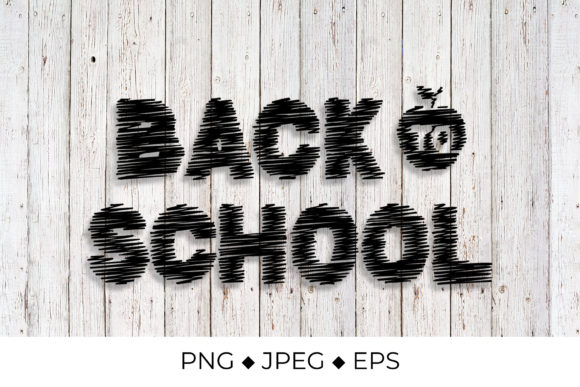
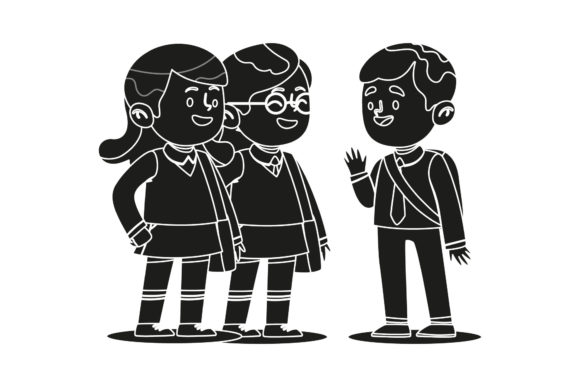
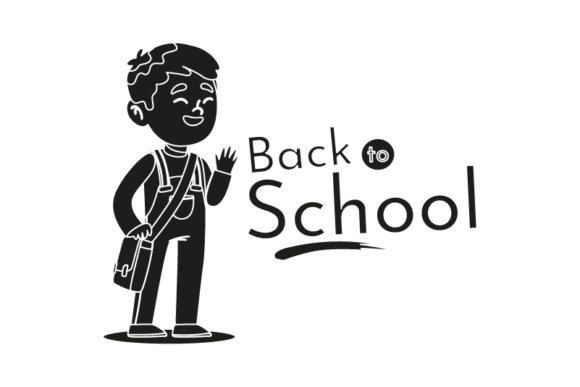
A Back to School Poster Silhouette typically relies on bold, dark shapes set against lighter backgrounds, capturing recognizable forms such as a child with a backpack, a bus, or school buildings. The silhouette approach strips away surface details, leaving the viewer to focus on composition, negative space, and the emotional resonance of the imagery. This can be especially effective for back-to-school themes, where the goal is often to evoke a mood—anticipation, nostalgia, or readiness—rather than to depict a specific scene in full color.
The product referenced includes six digital files across AI, EPS, SVG, DXF, JPG, and PNG formats, with a canvas size of 1920 by 1280 pixels. This range of formats means the design can be used in vector editing software (AI, EPS, SVG), cutting machines (DXF), and raster-based projects (JPG, PNG). The silhouette style lends itself well to this kind of multi-format delivery because the shapes are clean and scalable, making them suitable for everything from large banners to small stickers.
One distinctive feature of silhouette-based posters is their adaptability across different printing and digital contexts. Because they rely on contrast rather than color gradients or photographic detail, they tend to reproduce consistently across various media. This can reduce the need for extensive color correction or resolution adjustments when moving between print and web.
Comparing Silhouette Designs with Other Poster Styles
When evaluating a Back to School Poster Silhouette, it helps to consider how it stacks up against common alternatives. The most frequent comparisons arise with full-color illustrated posters, photography-based back-to-school designs, and text-heavy informational posters.
Full-color illustrated posters. Illustrated posters often use layered illustrations with multiple colors, textures, and character details. They can be visually rich and highly engaging, especially for younger audiences. However, they typically require more design time, careful color management, and may need to be adapted for different output formats. A silhouette design, by contrast, reduces complexity. If your project calls for consistency across different materials—such as a flyer, a social media graphic, and a banner—the silhouette approach minimizes the risk of visual inconsistency.
Photography-based designs. Photography offers authenticity and realism, which can be powerful for back-to-school campaigns that feature actual students or school environments. But sourcing high-quality, rights-cleared photos adds cost and legal considerations. Photos also require careful cropping and resolution handling, especially if the poster needs to be resized. A Back to School Poster Silhouette sidesteps these issues by using abstracted forms that are not tied to specific individuals or locations. This can be an advantage for organizations that need to avoid privacy concerns or that want a more universal, symbolic representation.
Text-heavy informational posters. Some back-to-school posters prioritize information—dates, supply lists, schedules—over imagery. While these are functional, they may lack visual appeal. A silhouette design can serve as a balanced middle ground: it provides strong visual interest without overwhelming the text, allowing the poster to communicate both emotionally and practically.
Strengths and Tradeoffs of Using a Silhouette-Based Poster
Every design choice comes with tradeoffs, and a Back to School Poster Silhouette is no exception. Understanding these can help you decide whether this style fits your specific context.
Strengths
- Scalability and format flexibility. Because the design is offered in vector and raster formats, you can scale it to any size without losing quality. This is especially useful if you need to use the same design across a poster, a website header, and a social media post.
- Ease of editing. The files are described as easy to edit, which is typical for silhouette graphics. You can change the background color, adjust the silhouette hue, or combine elements without needing advanced design skills. This appeals to users who may not have a full-time designer on staff.
- Consistent reproduction. Silhouette designs are less sensitive to differences in printing technology or screen calibration. The high-contrast nature means they often look good regardless of the output device.
- Timeless aesthetic. Silhouettes have a classic, almost timeless quality. They do not rely on trendy fonts or color palettes, so a back-to-school poster created this year can still feel current next year with minor updates.
Tradeoffs
- Limited visual detail. If your goal is to showcase specific products, uniforms, or activities in a realistic way, a silhouette may be too abstract. It conveys a feeling but not specifics.
- Less room for brand differentiation. Many silhouette posters look somewhat similar because they rely on common shapes like students, backpacks, and school buildings. If your brand relies on unique imagery or a distinct visual voice, a silhouette approach may not stand out enough.
- Potential for visual monotony. If used repeatedly across multiple materials, the same silhouette can feel repetitive. You may need to pair it with other design elements—like typography, patterns, or color accents—to maintain interest.
- Dependence on strong composition. Without color and detail to guide the eye, the composition of a silhouette poster becomes paramount. A weak layout will be more noticeable than it would be in a busier design.
When a Back to School Poster Silhouette Fits Best and When It May Not
The decision to use a Back to School Poster Silhouette depends largely on your audience, your distribution channels, and the message you want to convey.
Best-fit situations:
- You need to produce a consistent set of materials for multiple uses—posters, social media images, printed handouts, and cutting machine projects—and want a single design that works across all of them.
- Your timeline is tight and you need a design that requires minimal adjustment to background, size, or format.
- You are targeting an audience that responds well to clean, minimalist visuals, such as parents looking for straightforward, reassuring messaging rather than flashy graphics.
- You plan to use the design across multiple years and want a template that can be quickly updated with new dates or information without redesigning from scratch.
When another option may be better:
- Your campaign relies on showing diversity and inclusion through specific imagery, such as photographs of students from various backgrounds. Silhouettes, by nature, are less able to represent that kind of detail.
- You need to highlight specific products or services, such as a new backpack line or a school uniform, where detailed visuals are important.
- Your brand uses a very specific color system or visual style that a silhouette alone cannot support without extensive customization.
- You are creating a poster intended to be highly decorative or immersive, such as a large wall mural for a school lobby, where photographic or illustrated detail adds richness.
Practical Decision Factors for Choosing Your Poster Format
Beyond the style itself, there are several practical factors to weigh when deciding whether a Back to School Poster Silhouette aligns with your project. These considerations can help you evaluate the design as part of a broader resource library rather than a one-off solution.
File format compatibility. The availability of AI, EPS, SVG, DXF, JPG, and PNG files means the design can be used across a wide range of software and hardware. If you or your team use Adobe Illustrator, CorelDRAW, Cricut, or Silhouette Studio, you will likely find a format that works. However, if your workflow is entirely web-based and relies on tools that do not support vector files, the JPG and PNG versions will still serve you well, though you may lose some scalability options.
Canvas size and resolution. The 1920x1280 pixel canvas is suitable for many standard digital uses, such as website headers, social media posts, and small to medium prints. For larger posters—say, 24 by 36 inches or larger—you may need to rely on the vector formats to upscale without pixelation. This is a key factor to consider if your primary use is large-format print.
Ease of customization. Silhouette designs generally allow you to swap background colors, add text overlays, or combine multiple elements. If you plan to use the same base design for multiple purposes, you can save time by reusing the same silhouette. But if you need to create entirely different looks for different audiences, a more modular collection of assets might serve you better.
Budget and resources. For organizations without a dedicated design team, a ready-made silhouette poster that comes in multiple formats can be a cost-effective solution. It eliminates the need to hire a designer for a custom illustration or a photographer for original images. However, if your budget allows for custom work, you might achieve a more distinctive visual identity that better aligns with your mission.
Long-term reuse. One of the underappreciated advantages of a silhouette design is its longevity. Trends in color, typography, and photography shift quickly. A silhouette, being more abstract, tends to age gracefully. If you anticipate needing a back-to-school poster for several seasons, this style can serve as a stable template that requires only minor updates to text and background.
Putting It in Perspective
A Back to School Poster Silhouette is not a universal solution, but it is a practical and versatile option for many common back-to-school scenarios. Its strength lies in simplicity, consistency, and cross-format compatibility. For those who need a reliable design that can be edited and scaled without friction, it offers clear advantages over more complex styles.
At the same time, it is important to recognize where this approach has limits. If your message requires detailed imagery, nuanced representation, or a high degree of brand differentiation, a silhouette may feel too generic for your needs. In those cases, a full-color illustration, a carefully composed photograph, or a more text-driven layout might be a better fit.
The key is to match the design approach to the specific demands of your campaign, your audience, and your production environment. By understanding both the strengths and the tradeoffs of the Back to School Poster Silhouette, you can make an informed choice that balances visual impact with practical usability. Whether you use it as a standalone design or as part of a broader toolkit, it remains a resource worth considering for any back-to-school project where simplicity and versatility are priorities.